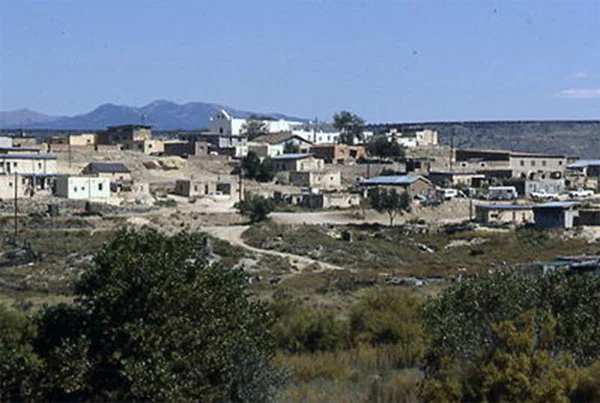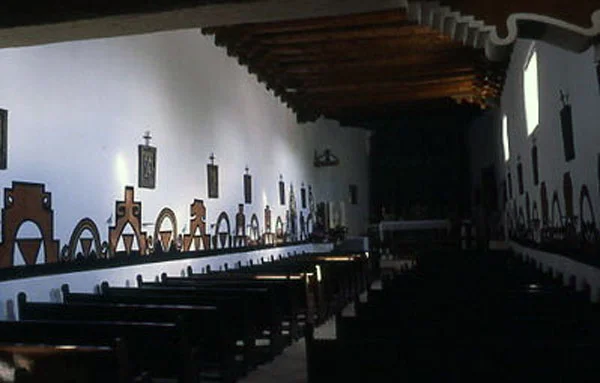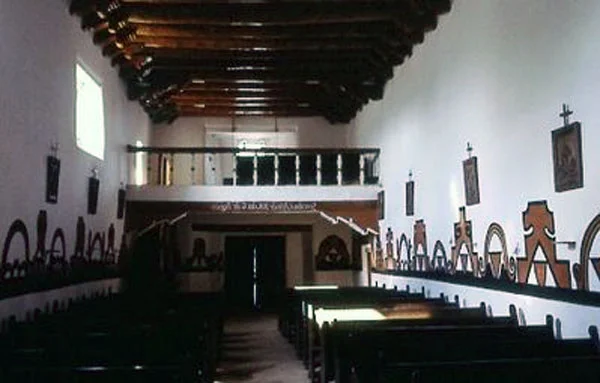
San José de Laguna Church stands in Laguna Pueblo, New Mexico, representing an important chapter in the region’s spiritual and architectural heritage. Laguna Pueblo itself was established by people from Acoma, Zuni, Isleta, and Queres communities from Santa Fe. Under the leadership of Friar Antonio de Miranda, Laguna builders completed the San José de Laguna Church in 1699, making it a significant example of late 17th-century Spanish colonial religious architecture in the American Southwest.
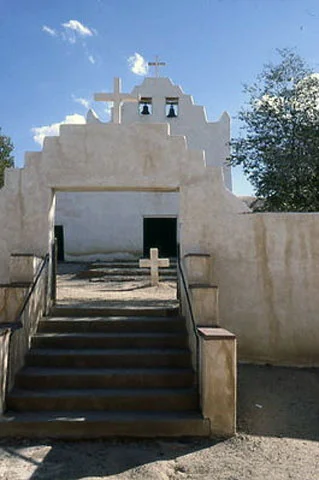
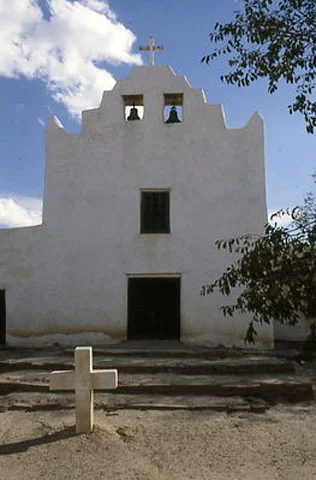
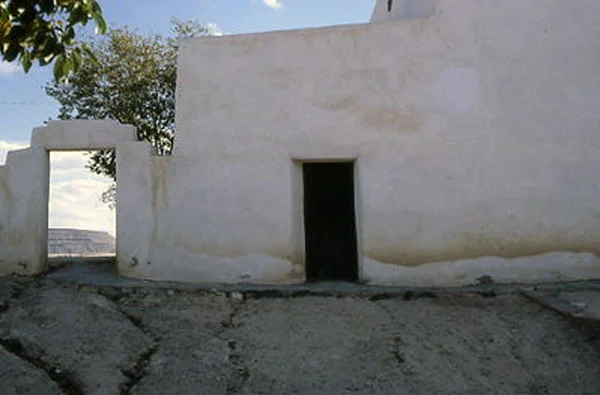
The mission displays distinctive characteristics typical of the period. The structure features a white façade with a distinctive undulating edging on a two bell belfry. The construction employed stone laid in adobe mortar with mud plaster finishing both the interior and exterior walls. A stepped doorway marks the side entrance to the church.
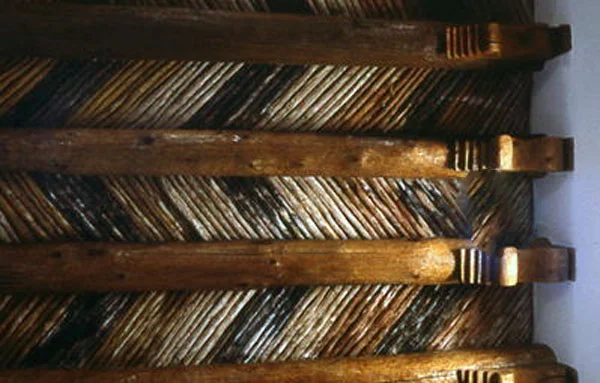
The interior showcases elaborate decorative elements, including painted canvases along the nave walls depicting birds resting on tomb-like forms. Beautifully carved beams supporting the roof were transported from considerable distances, while cedar lattices remain part of the original ceiling design.
The altar was carved from native pine and painted by a Laguna santero (saint maker). Above it sits a painted canopy made of animal hide and decorated with native American symbols, representing a unique blend of Spanish Catholic and indigenous artistic traditions.