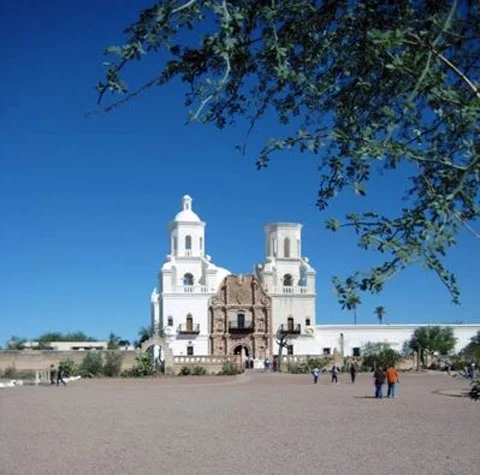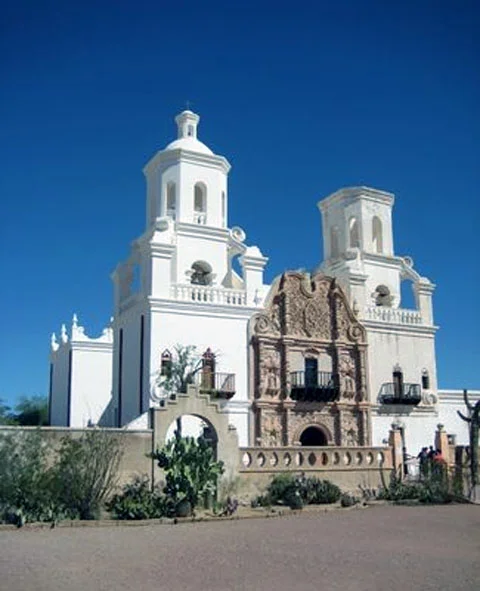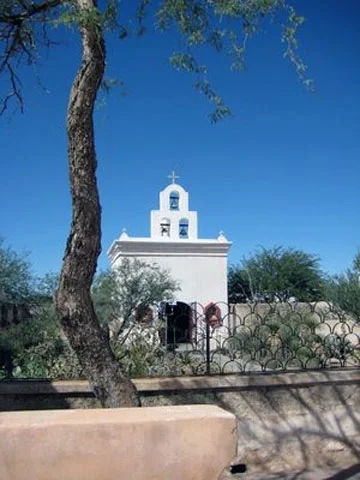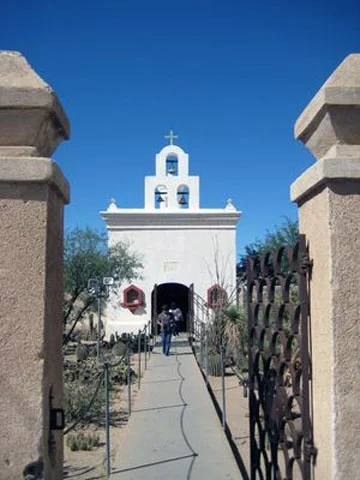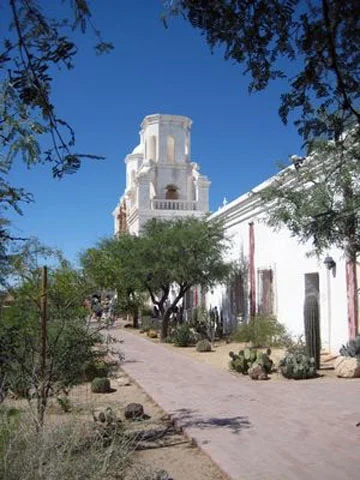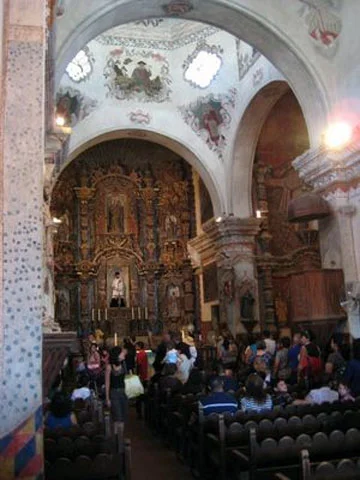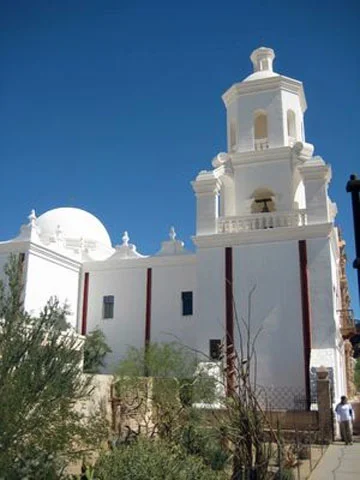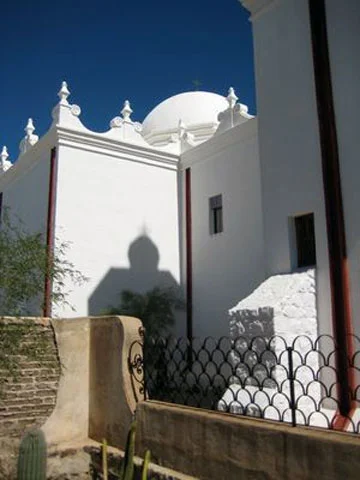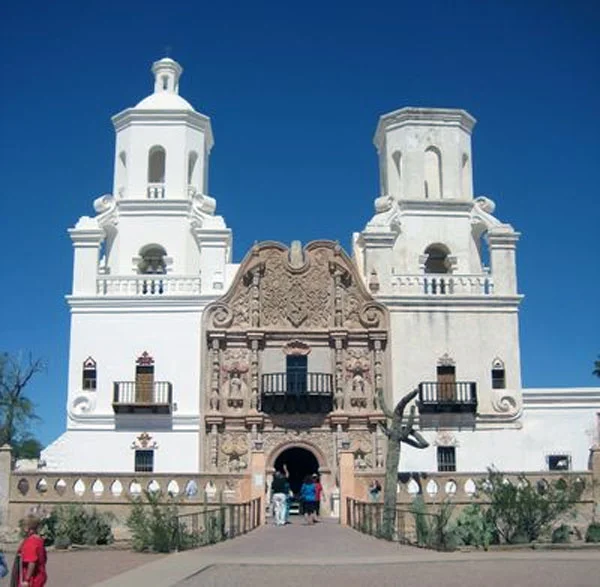
In the late 1600s, Franciscan Friar Father Eusebio Kino arrived at the village of Wa:k and established a Catholic mission in 1692 with the welcome of the Tohono O’odham people. The current church structure dates to the late 1700s, when Southern Arizona belonged to New Spain. Construction began in 1783 under the direction of Fr. Juan Bautista Velderrain, who hired architect Ignacio Gaona and assembled a large workforce of local Tohono O’odham laborers. The project was funded through borrowed money from a Sonoran rancher and completed in 1797.
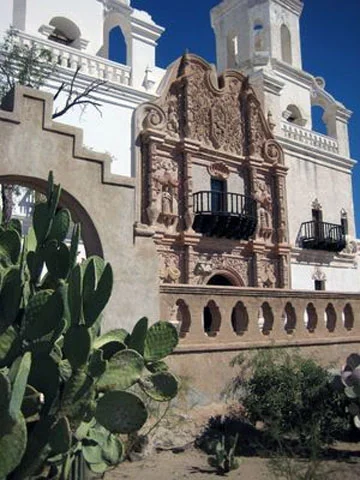
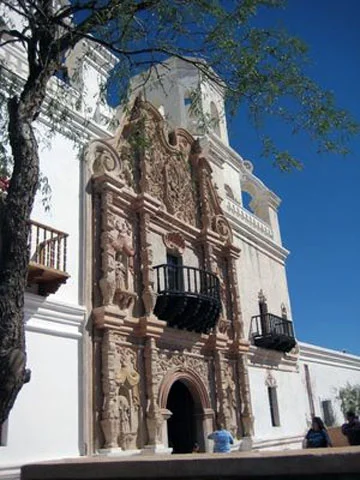
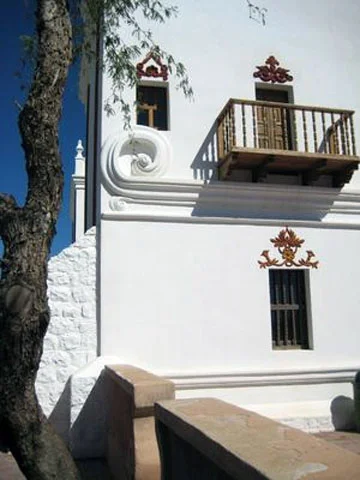
The mission employs a distinctive construction method using low-fire clay brick, stone and lime mortar, with the entire structure roofed with masonry vaults. This makes it unique among Spanish Colonial buildings within U.S. borders. Shell motifs, symbolizing pilgrimage after Spain’s patron saint Santiago, appear throughout the structure in window treatments, the sanctuary, facade, and interior details.
The interior decoration likely came from artists in Queretaro, New Spain. Sculptures were crafted in guild workshops and transported by donkey to the site. In 1978, community leaders established the Patronanto San Xavier to promote conservation efforts. An international team of conservators spent five years cleaning, removing overpainting, and repairing the interior painted and sculptured art.
The mission transitioned through multiple jurisdictions: Mexican independence in 1821, the Gadsden Purchase in 1854 bringing it under U.S. control, and placement under the Diocese of Santa Fe in 1859 when repairs began.