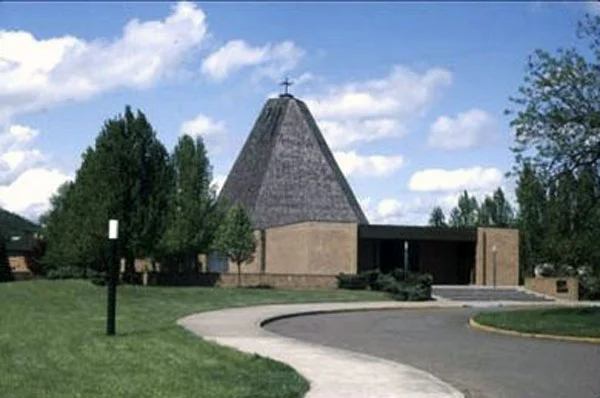
St. Joseph Church in Roseburg represents a significant example of post-Vatican II Catholic church design. The structure was designed by the architectural firm Zimmer, Frasca, and Belluschi and completed in 1966.
The church’s most distinctive architectural element is its skylight tower positioned above the sanctuary. This design was inspired by the “wigwam slash burner” structures common to the local Roseburg lumber industry, creating a unique visual connection between the church and its regional context.
The sanctuary features multiple artistic and liturgical components: the altar wall includes sculptural elements and sanctuary windows designed to enhance the worship space; a baptismal font is located at the church entry, positioned near decorative windows; four sanctuary windows provide natural light and spiritual atmosphere; the church houses a sculpture of St. Francis of Assisi and a Madonna and Child sculpture; the Sacrament Chapel features a wood medallion sculpture by artist Mary Lewis; and a fabric tapestry installation contributes to the interior’s artistic character.
The overall design emphasizes the integration of contemporary art with liturgical function, reflecting post-Vatican II architectural principles that sought to create meaningful connections between sacred spaces and artistic expression.