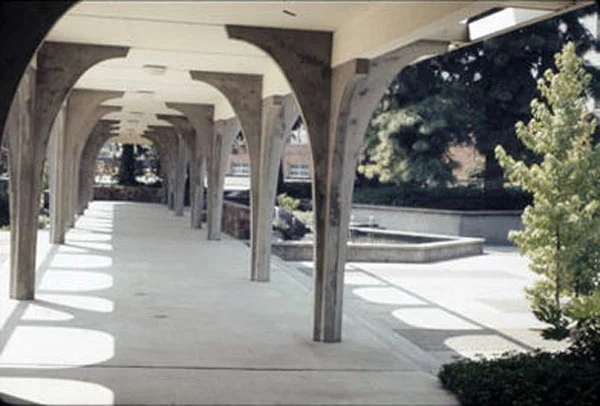
St. John Church in Milwaukie represents a notable example of post-Vatican II Catholic church architecture. Designed by architects Bogan and Hoesy (AIA) in 1964, the structure embodies modern liturgical design principles that emerged following the Second Vatican Council.
The church’s most striking exterior element is its spire, which resembles a tent, to portray the temporary nature of man’s life on earth. This symbolism reflects the spiritual intentions of the architectural design.
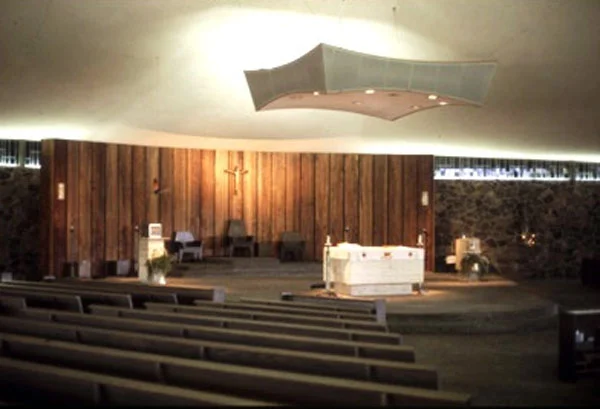
The interior adopts a semi-circular layout that creates an intimate connection between the congregation and the sanctuary. This configuration emphasizes the central positioning of the altar, tabernacle, and ambo within the worship space.
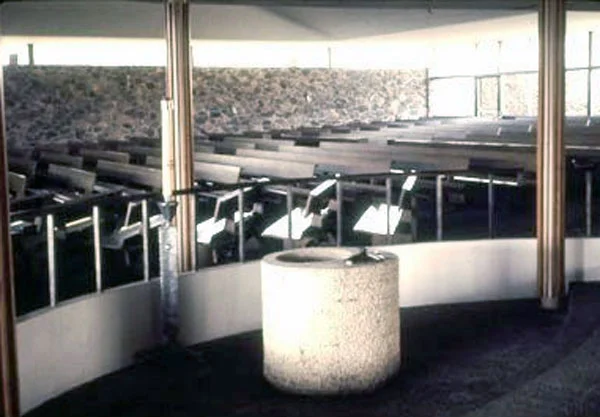
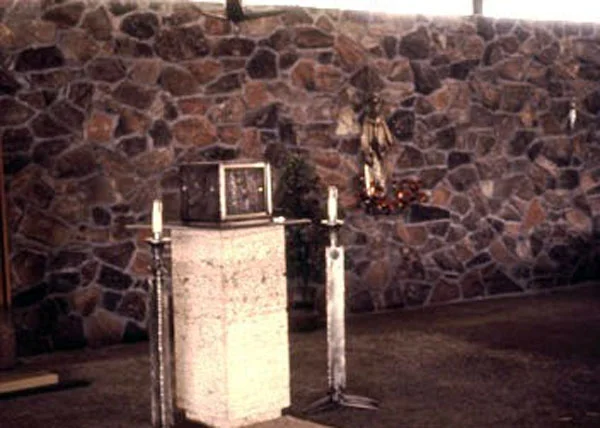
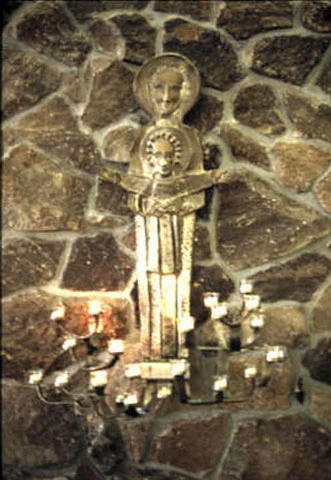
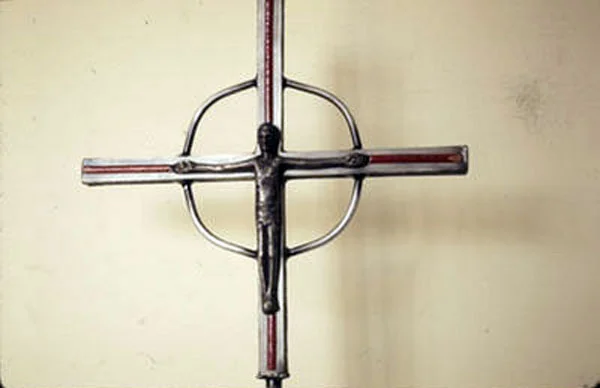
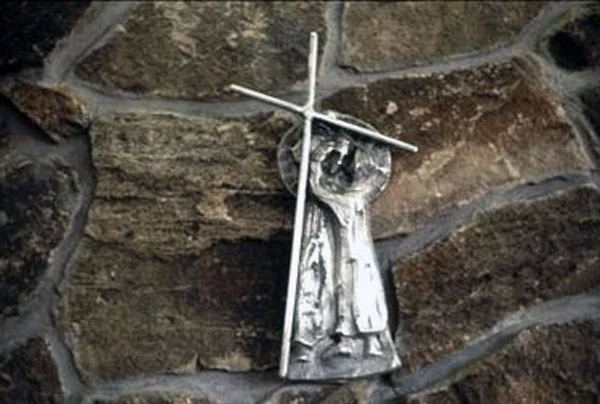
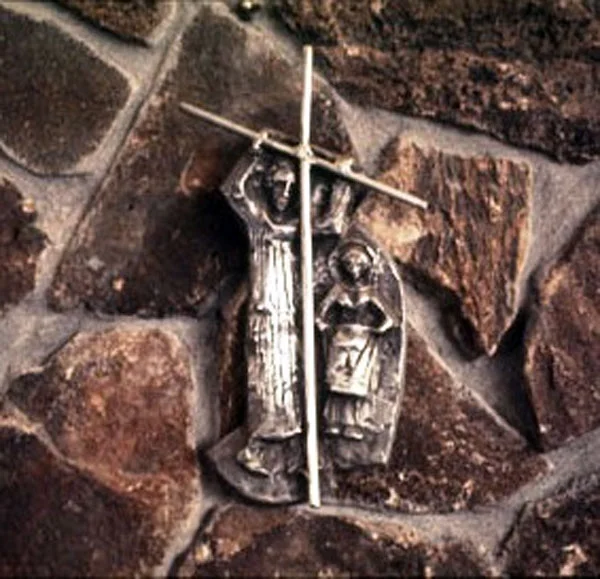
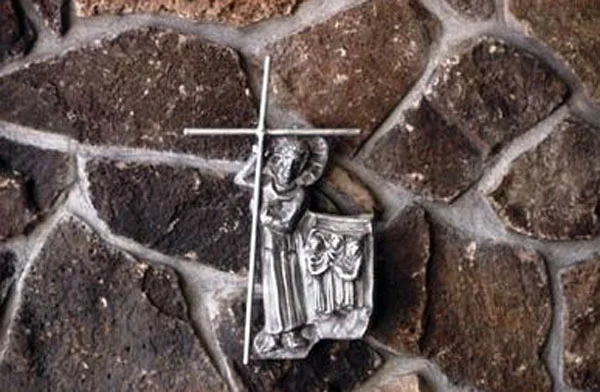
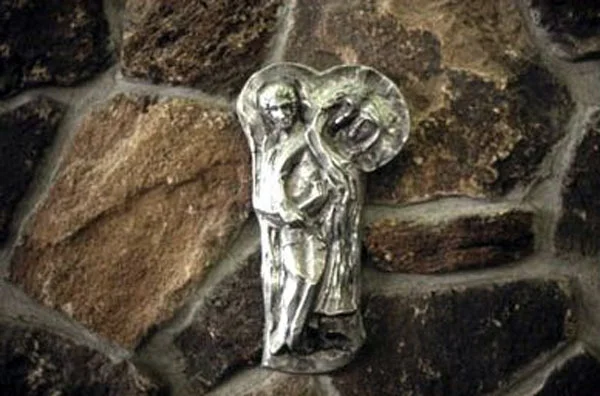
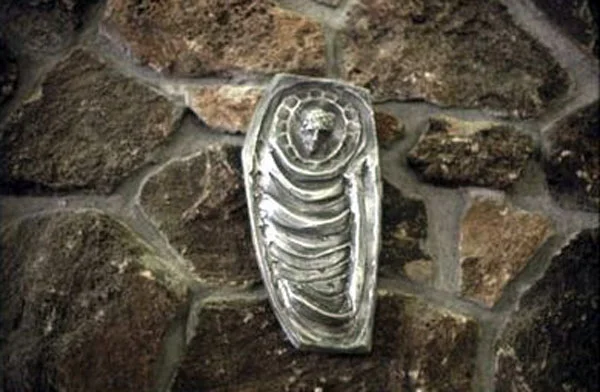
The church features significant artistic contributions by sculptor Lee Kelly, whose metal works enhance the liturgical environment. These include: a baptismal font set against a field-stone rear wall; a Madonna and Child metal sculpture; a processional cross; and Stations of the Cross mounted on field-stone walls throughout the space. The tabernacle is positioned on a stone plinth, continuing the church’s integration of natural stone materials as design elements.