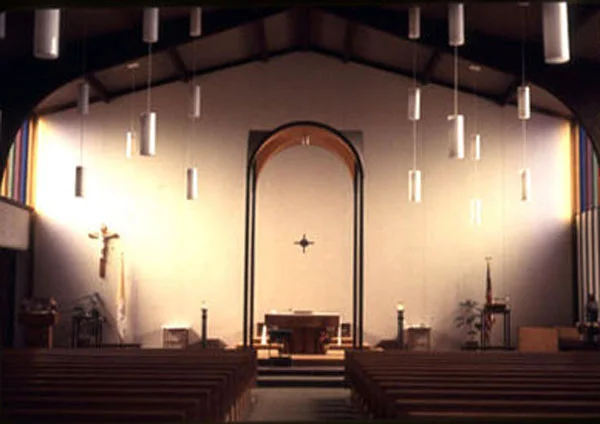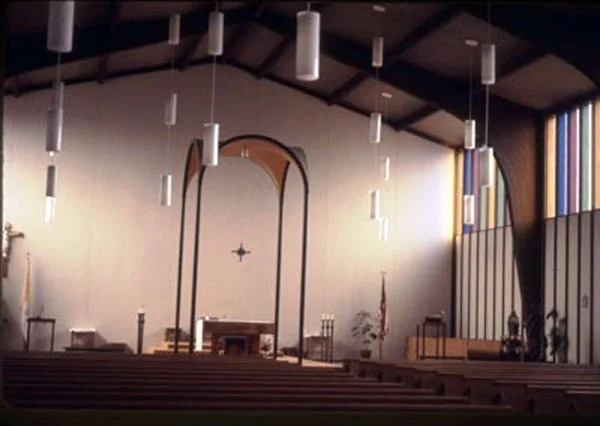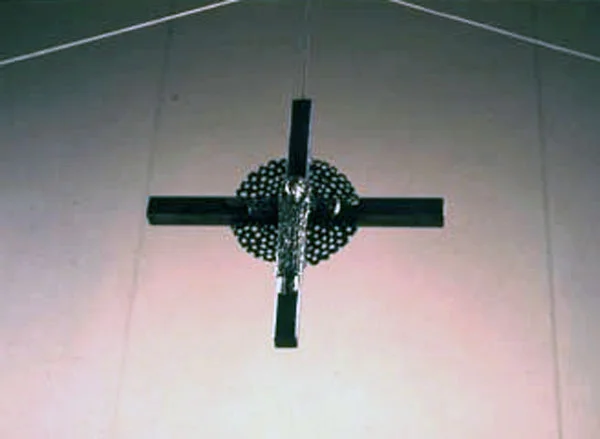
St. Alice Church in Portland underwent significant liturgical renovation in 1968, reflecting mid-century developments in Catholic church design and practice.
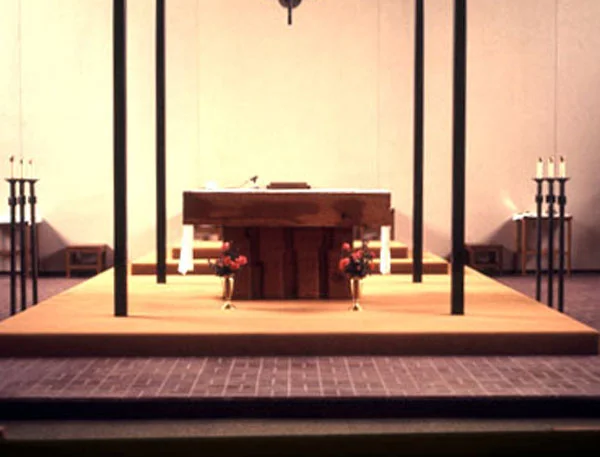
The 1968 renovation transformed the worship space with a new arrangement of liturgical elements. The sanctuary includes a baldachino (decorative canopy) positioned above the altar area, creating a focal point for the bema, or altar floor.
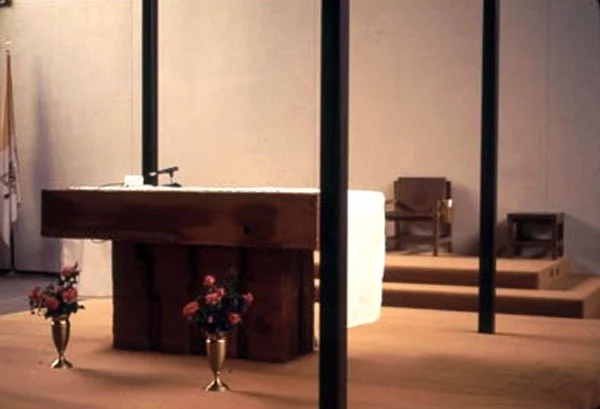
Local artisan Lee Kelly crafted distinctive elements for the renovated sanctuary. He created a handmade altar from local timber and designed the presider’s chair, bringing regional materials into the liturgical space. Kelly also executed a silver filigree crucifix depicting the Risen Christ, which became a prominent devotional focal point within the sanctuary.
The renovation exemplified the role of liturgical consultants in post-Vatican II church design. The reconfigured sanctuary featured an ambo reflecting updated approaches to how sacred scripture was presented during worship services. The church demonstrates how mid-20th century Catholic architecture integrated contemporary artistry with evolving liturgical practices, emphasizing accessibility and the relationship between artistic craftsmanship and spiritual function.