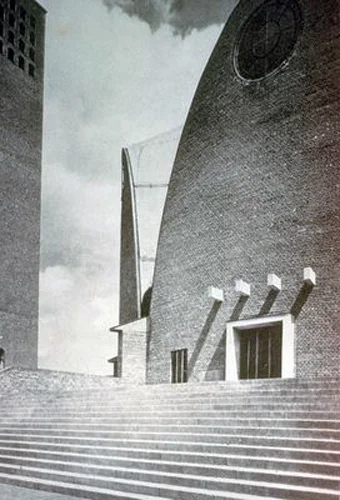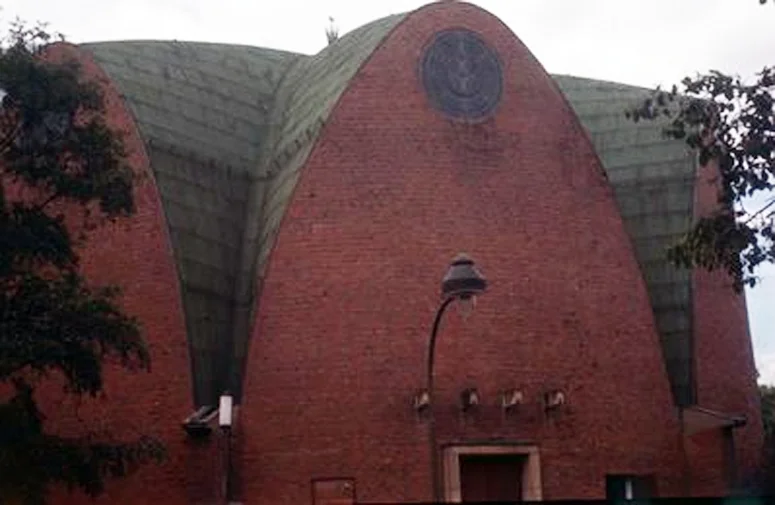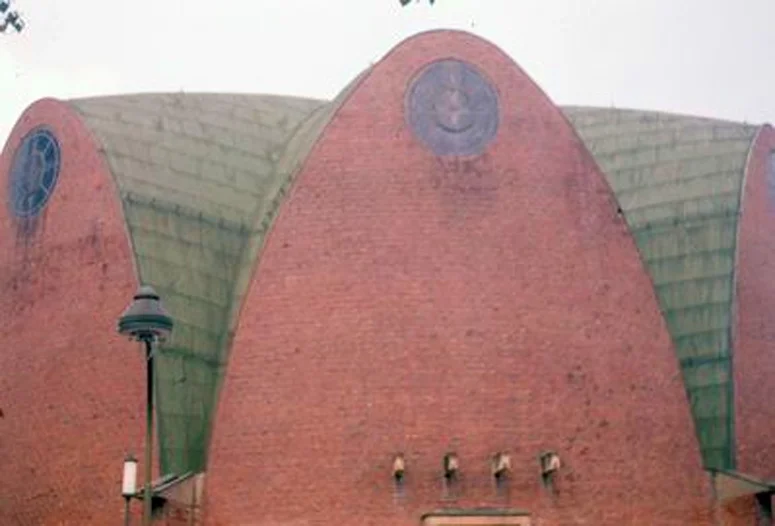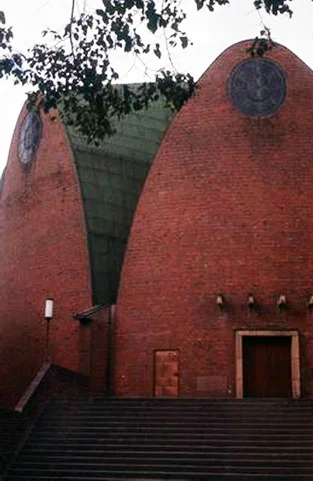
St. Engelbert Catholic Church represents a significant example of early 20th-century Catholic church design. Built between 1930 and 1932, the structure showcases innovative architectural principles that departed from traditional ecclesiastical forms.
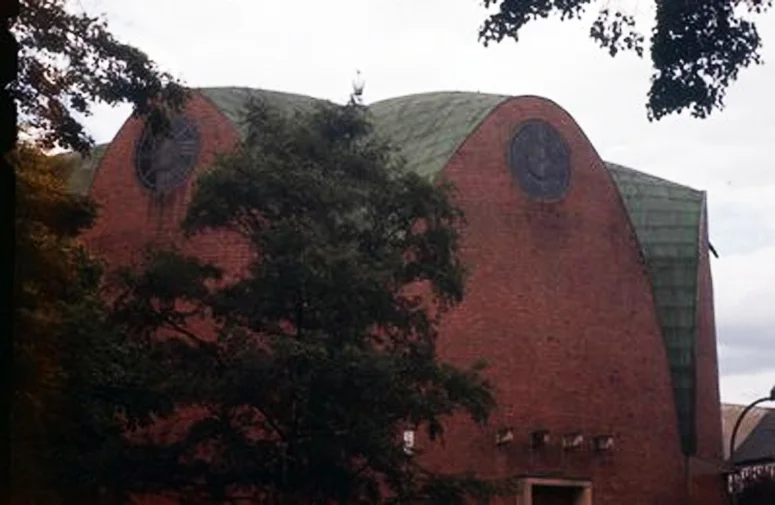
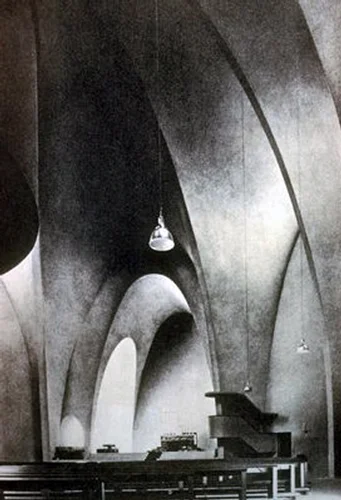
The church was designed by architect Dominikus Böhm (1880–1955), who served as one of the leading figures of Catholic Church architecture following World War I. The design features an arched façade, circular window, and bell tower. The church’s most striking characteristics include its curved, circular layout complemented by parabolic vaults — a series of radiating parabolic vaults in a circular shape — creating forms notably different from the rectangular church designs of earlier periods.
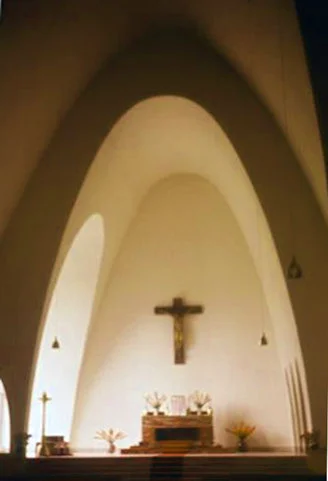
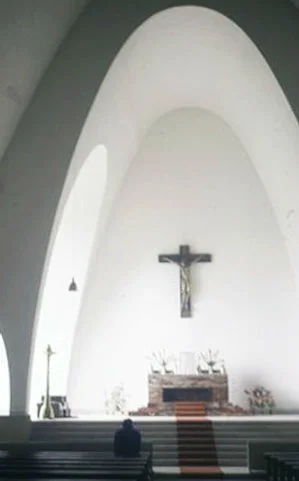
The exterior showcases a brick arched façade with rose windows, while multiple arches in rich brick stand prominently against the dark roof. Inside, the sanctuary demonstrates how the curved architectural elements serve the liturgy. Natural light floods the altar area, which is raised on a free-standing platform above the congregation to encourage participation and improve visibility. A curved ambo complements the overall design of the radiating vaults.