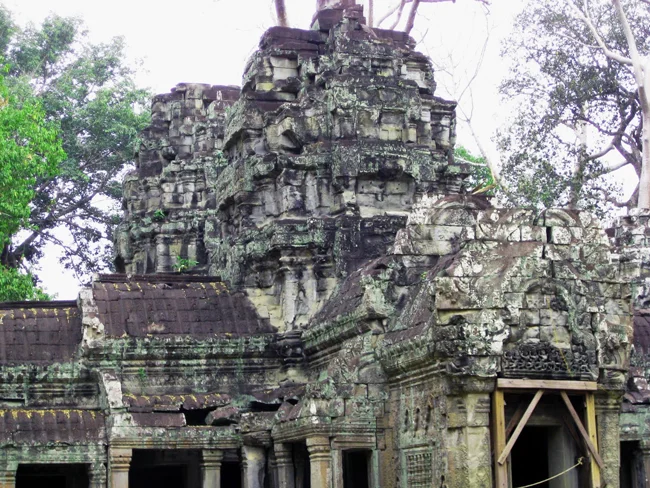
Ta Prohm stands as a remarkable testament to nature’s power over human construction. Built in 1186 and originally dedicated to the mother of Jayavarman VII, this Buddhist monastery once thrived as a vital spiritual center. According to historical inscriptions, the complex housed approximately 12,640 inhabitants, including 615 dancers who performed religious ceremonies.
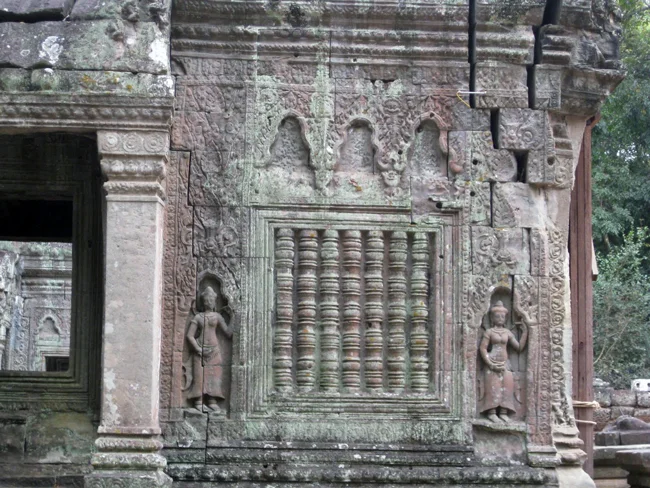
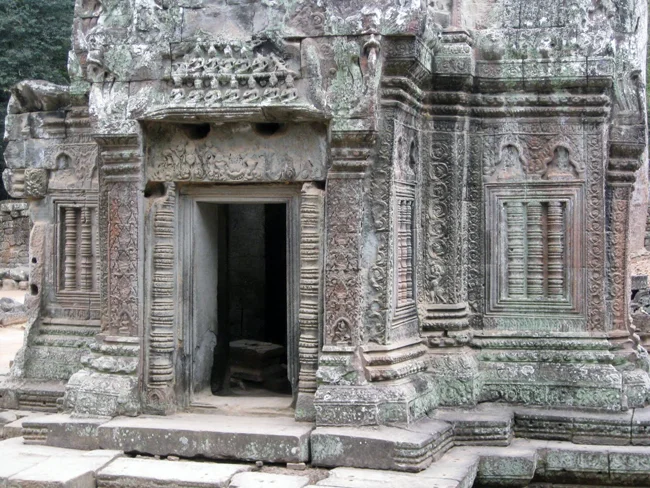
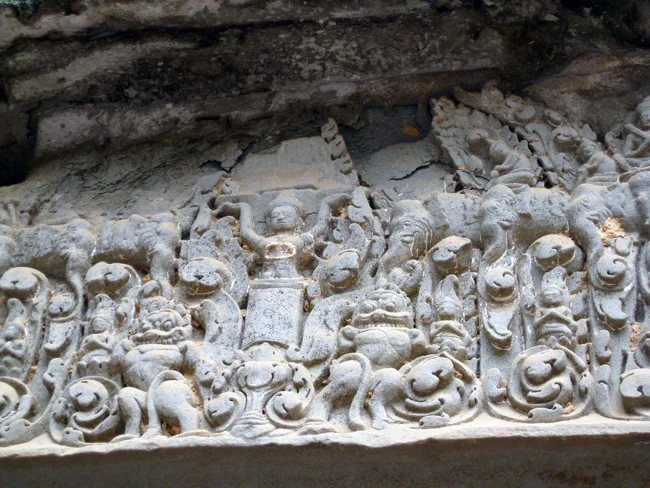
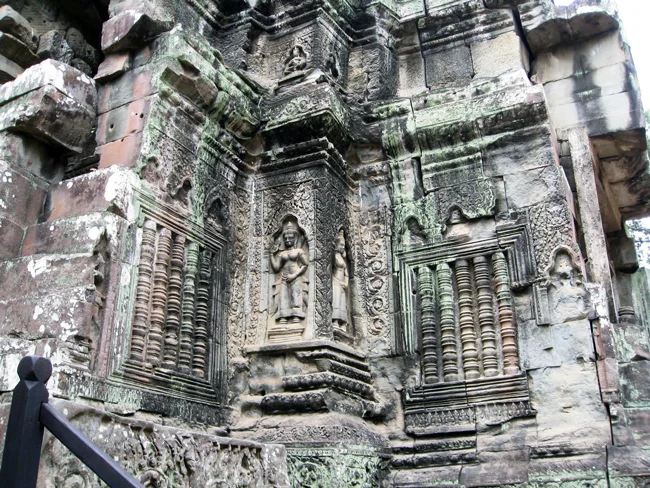
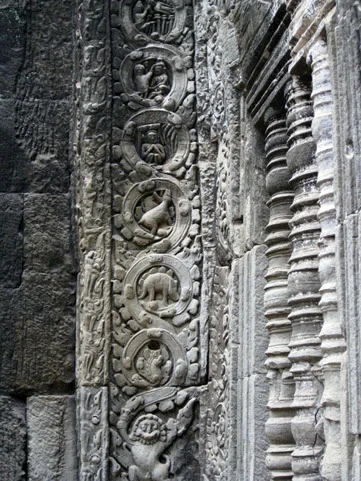
The monastery features five distinct enclosures connected by courtyards and narrow corridors. Despite centuries of decay, visitors can still observe intricately carved stonework adorning the remaining walls, particularly around portals where bas-reliefs and religious motifs showcase the artisans’ skill.
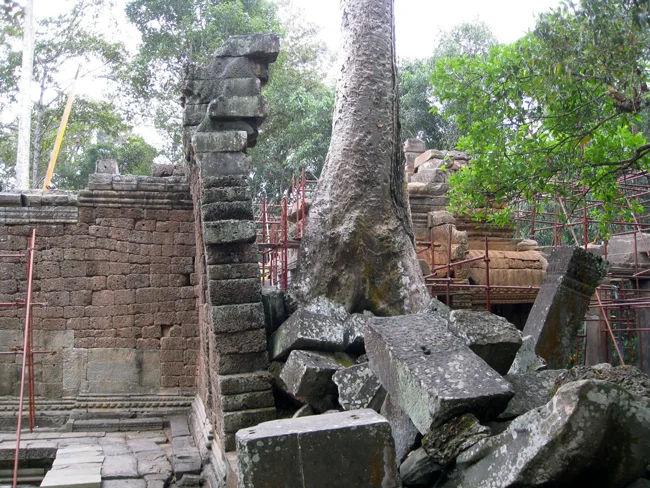
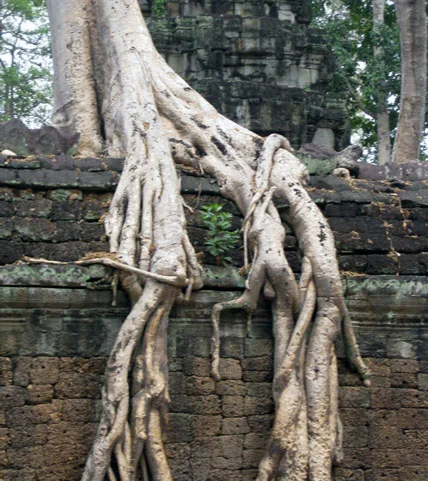
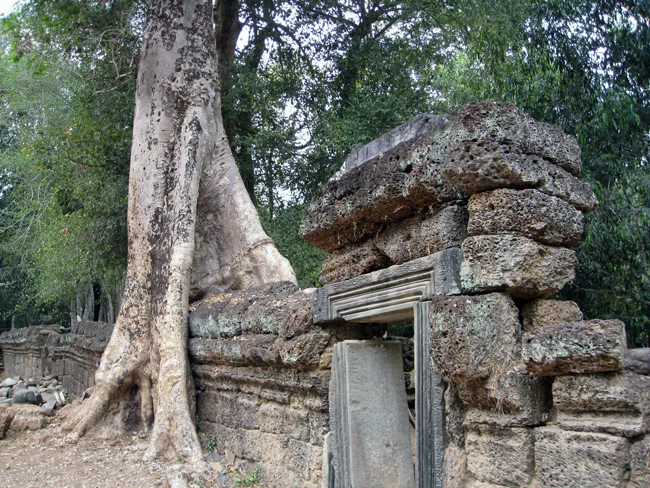
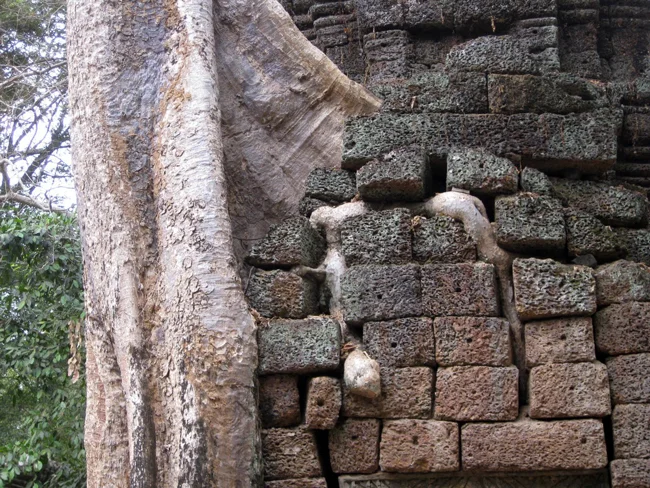
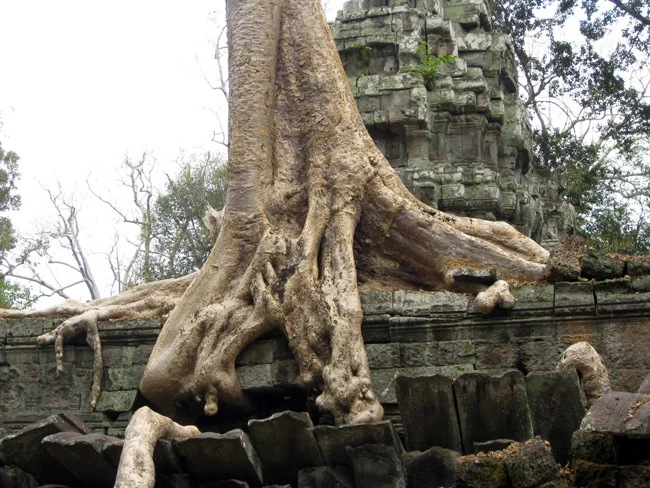
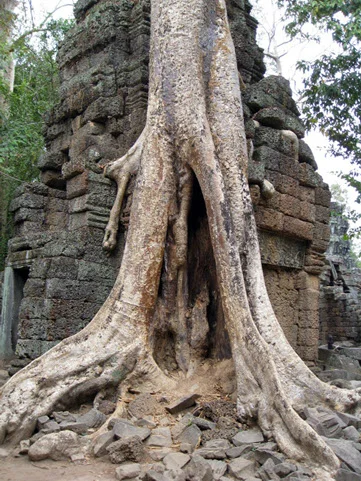
Today, Ta Prohm’s fame derives not from architectural grandeur but from its unique struggle with nature. Massive tree roots have overwhelmed the structure, uprooting walls and foundations alike. These roots extend from the forest floor, growing down the temple’s faces and covering towers with their grip. The sight dramatically illustrates how Cambodian forest vegetation, left unchecked, proves stronger than stone.
The remaining carved elements reveal the temple’s original splendor. Elephants with extended trunks adorn the stone surfaces alongside deities and demons. Apsara carvings and additional bas-reliefs further demonstrate the sophisticated sculptural traditions of the Khmer Empire.