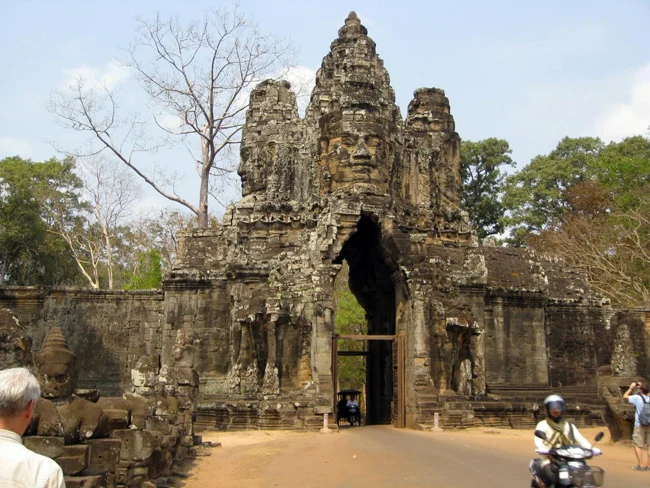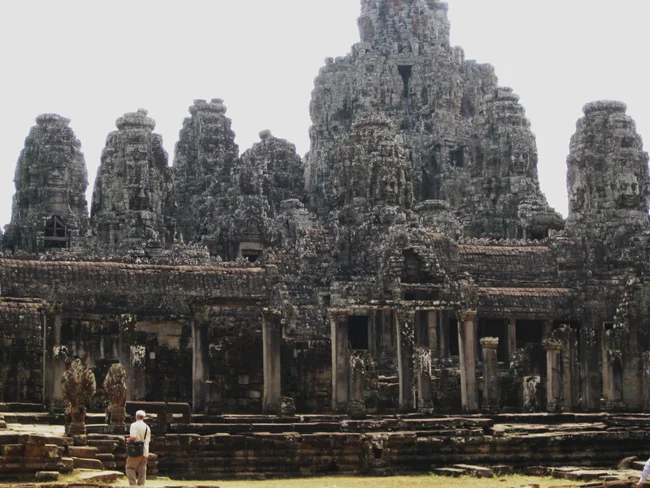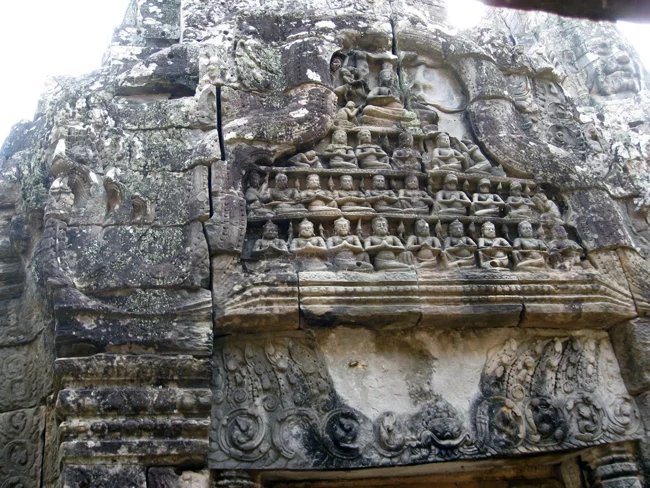
Bayon represents a remarkable architectural achievement constructed at the end of the 12th century. This temple complex functioned as a symbolic representation of the kingdom, incorporating elements of both Buddhist and Hindu traditions — Buddhist imagery to the south and east, Hindu representations to the north and west.
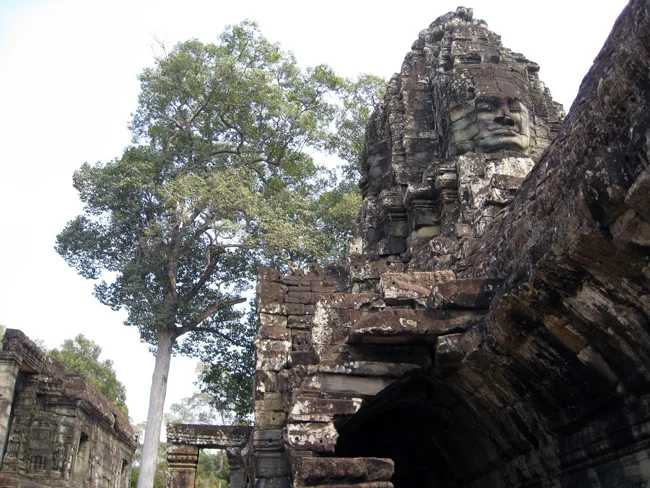
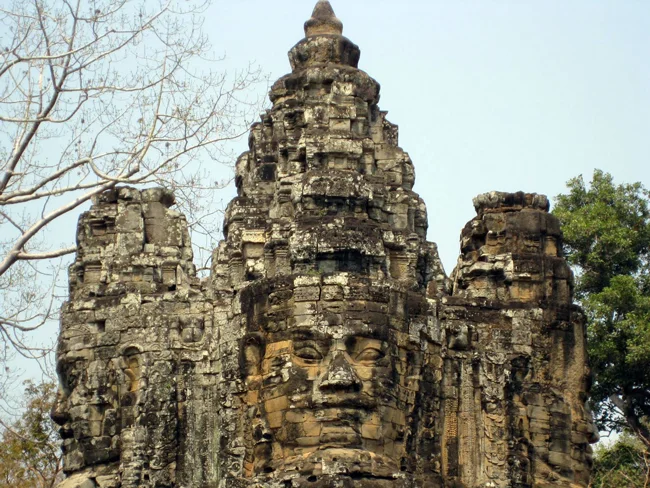
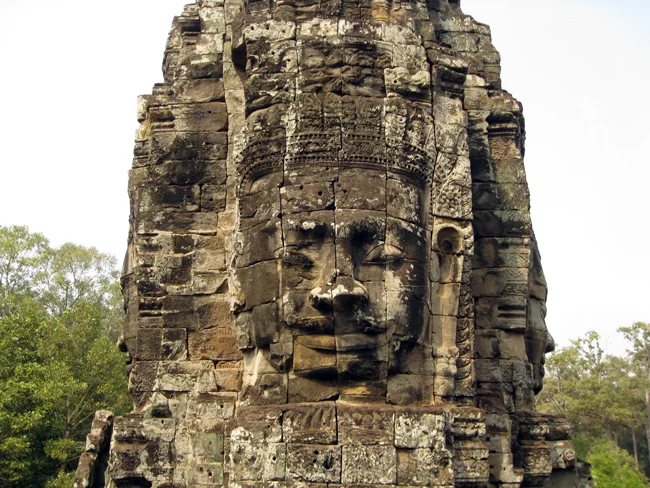
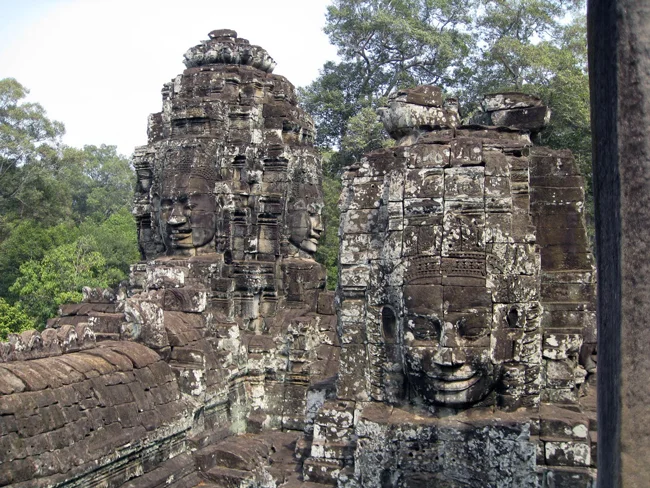
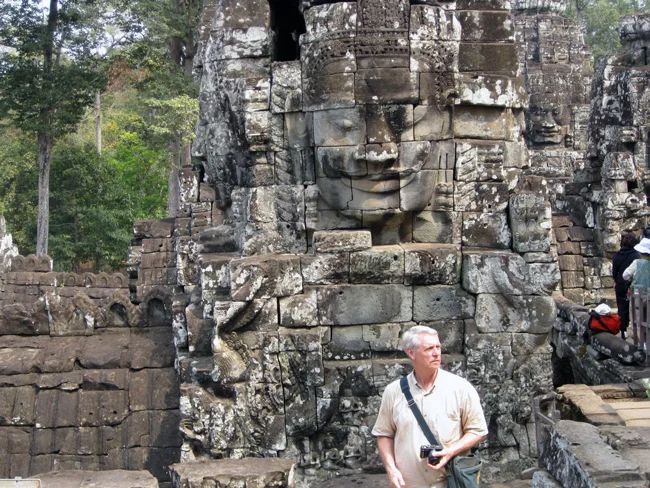
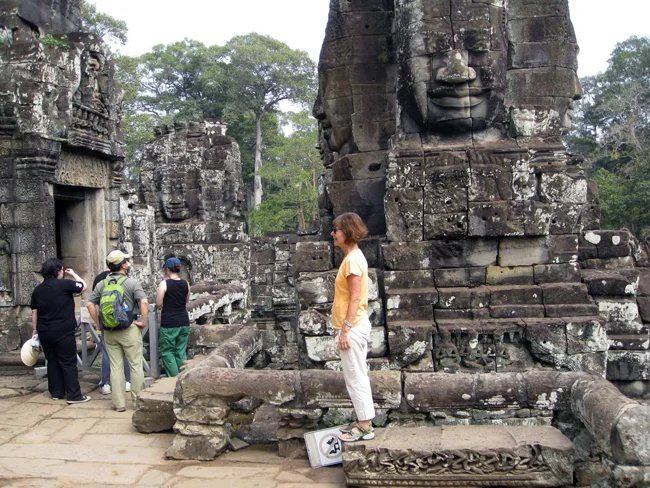
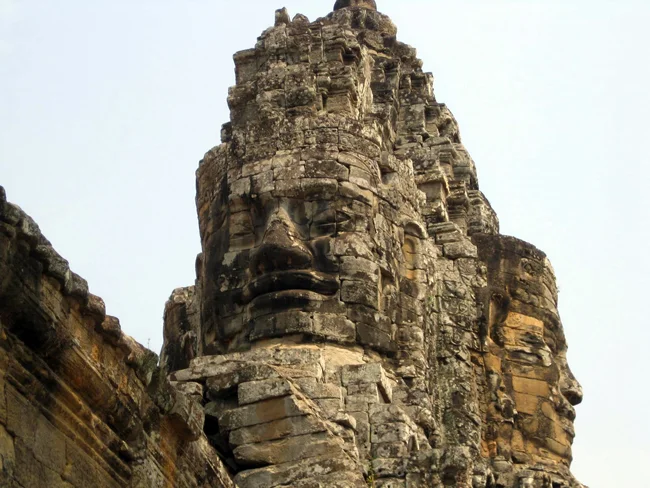
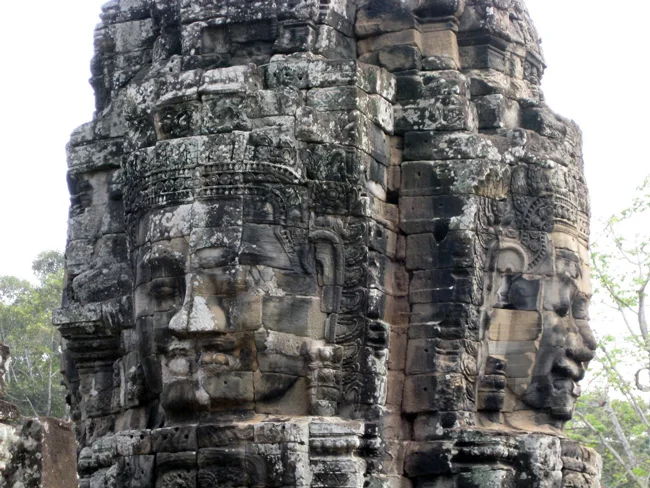
The temple is renowned for its 54 towers, each adorned with enormous carved faces of Avalokiteshvara that closely resemble Cambodia’s legendary king Jayavarman VII. The huge faces smile down from every angle of the towers, watching over and emanating control over the kingdom. These monumental heads surround visitors from all perspectives, symbolizing both divine omnipresence and the monarch’s authority throughout the realm.
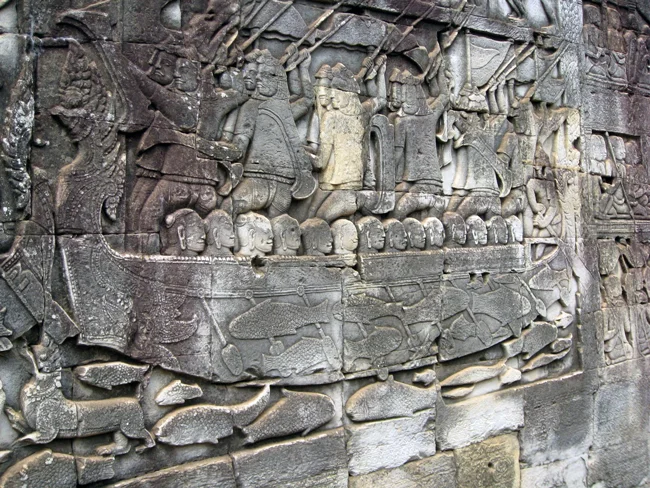
Bayon occupies the central position within Angkor Thom, a sprawling complex exceeding 10 square kilometers. The entire city is enclosed by a square wall eight meters high and 12 kilometers in length, surrounded by a 100-meter-wide moat. Bas-reliefs depict naval conflicts between Khmer forces and the Cham people, along with scenes of daily village life and aquatic creatures from Tonle Sap Lake.