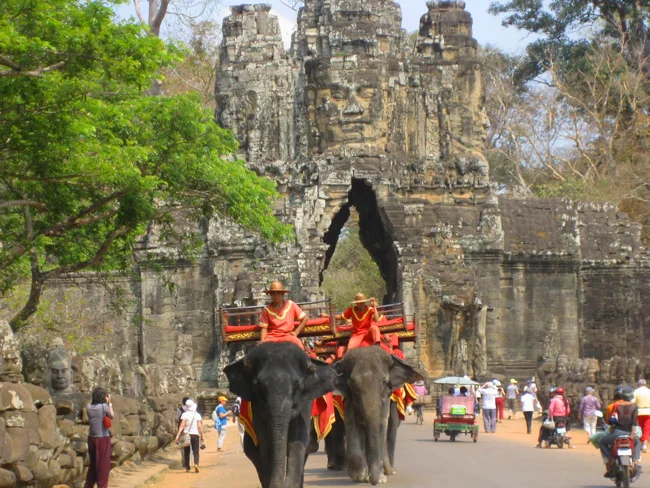
The Angkor Thom Gate represents a remarkable example of 12th-century Khmer architecture and artistic achievement. This walled city featured five monumental gates, each standing approximately 20 meters in height. One gate was positioned in the northern, southern, and western walls, with two gates in the eastern walls.
The gates are crowned with carved faces of Bodhisattva Avalokiteshvara, a benevolent figure depicted as gazing protectively over the kingdom below. These stone visages tower impressively above visitors traversing the causeways.
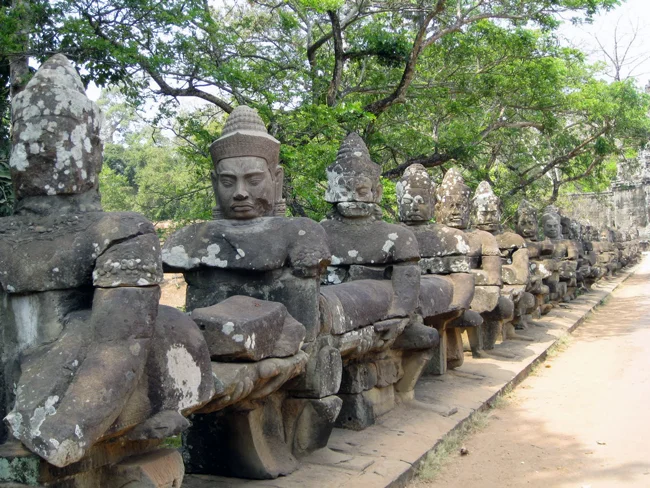
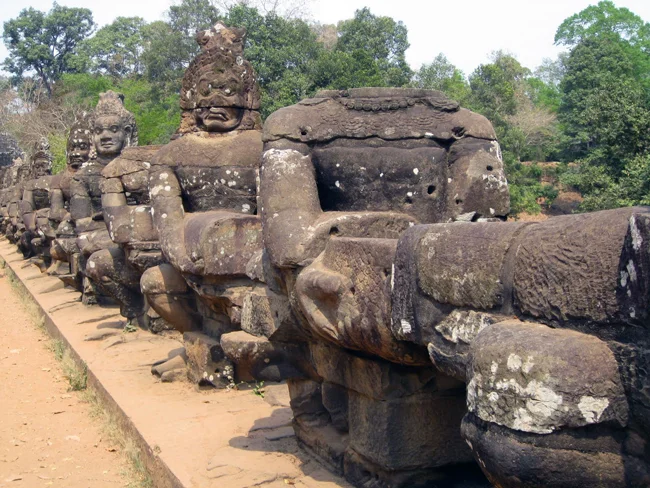
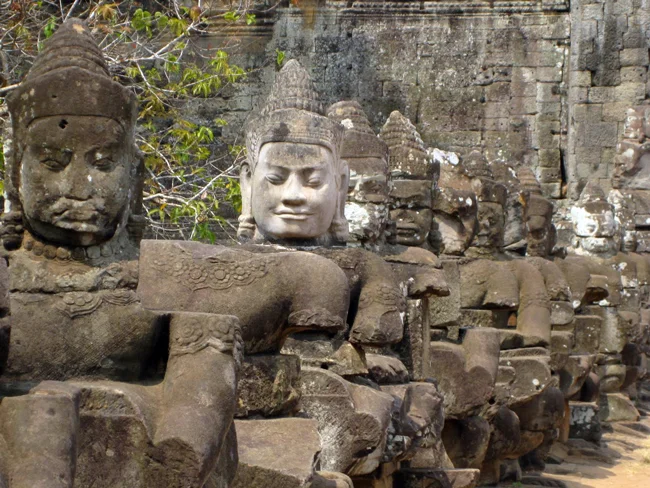
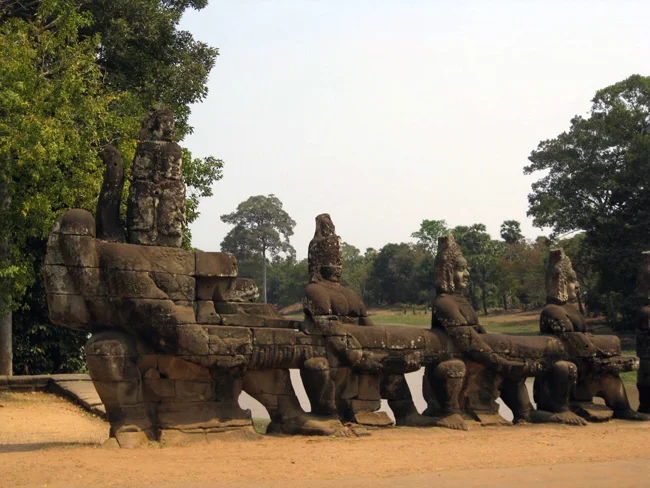
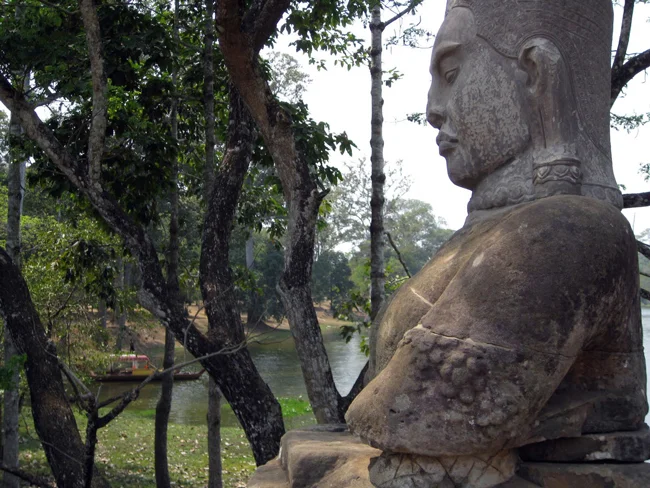
The entrance approach is bordered by elaborate sculptural reliefs depicting the Churning of the Ocean of Milk, a significant mythological narrative in Hindu and Buddhist tradition. This monumental composition features 54 demons and 54 gods engaged in an epic struggle along the causeway. According to the mythology, the gods and demons participated in the vital tug of war in order to control the extraction from the sea of the elixir of immortality.
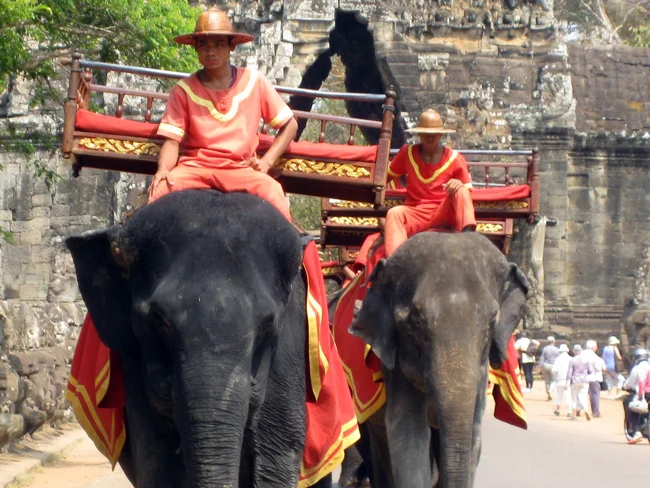
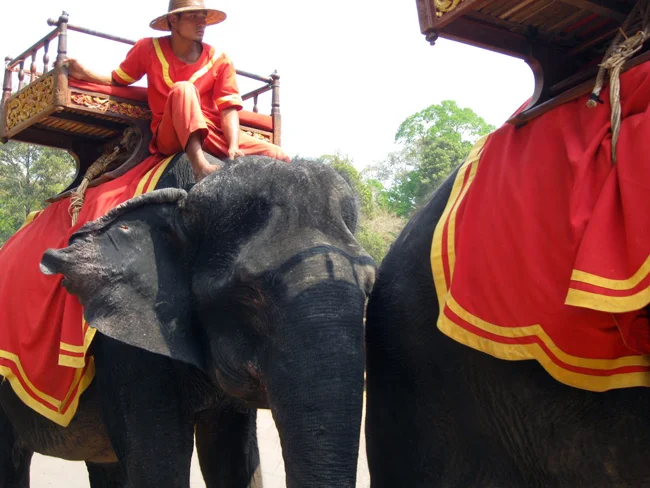
Evidence suggests elephants served as primary transportation and labor throughout the 12th-century kingdom. A dedicated Terrace of Elephants occupied a central location within the walled enclosure and ranked among the city’s most significant monuments. A protective moat encircled the entire city of Angkor Thom, adding to its defensive infrastructure.